
Fixing Sagging, Cracked, and Water-Damaged Ceilings
Ceiling Repair in Tri-State area Township for sagging drywall, plaster cracks, and staining after roof or plumbing leaks
Trav Construction Group provides ceiling repair in Tri-State area Township when your overhead surfaces sag between joists, develop spiderweb cracks radiating from corners, or show brown stains and soft spots following a leak. You need this service after a bathroom overflow soaks through to the floor below, when an aging plaster ceiling starts pulling away from the lath, or when you are preparing a home for sale and cannot ignore the watermark above the second-floor hallway.
Ceiling repair restores structural integrity and visual uniformity to damaged overhead surfaces. The process begins with identifying the cause of failure, cutting out compromised material, reinforcing the substrate if necessary, installing new drywall or patching plaster, taping and finishing seams, and sanding the repair flush with the surrounding plane. Water-damaged sections require confirmation that the roof, flashing, or pipe has been repaired before any patching proceeds, as unresolved moisture will ruin new materials within weeks.
If your ceiling shows visible damage or structural deflection in Tri-State area Township, contact Trav Construction Group to evaluate the extent of the issue and outline a repair plan.
How Ceiling Repairs Are Performed
Ceiling work begins with protecting floors and furniture using drop cloths and plastic sheeting, as cutting and sanding overhead produces more airborne dust than wall repairs. Damaged sections are removed back to solid framing, and if joists are spaced too far apart or the existing fastening has failed, blocking or furring strips are added to provide secure attachment points. New drywall panels are cut to fit, lifted into position, and screwed directly to the framing with drywall screws driven every eight inches along each joist.
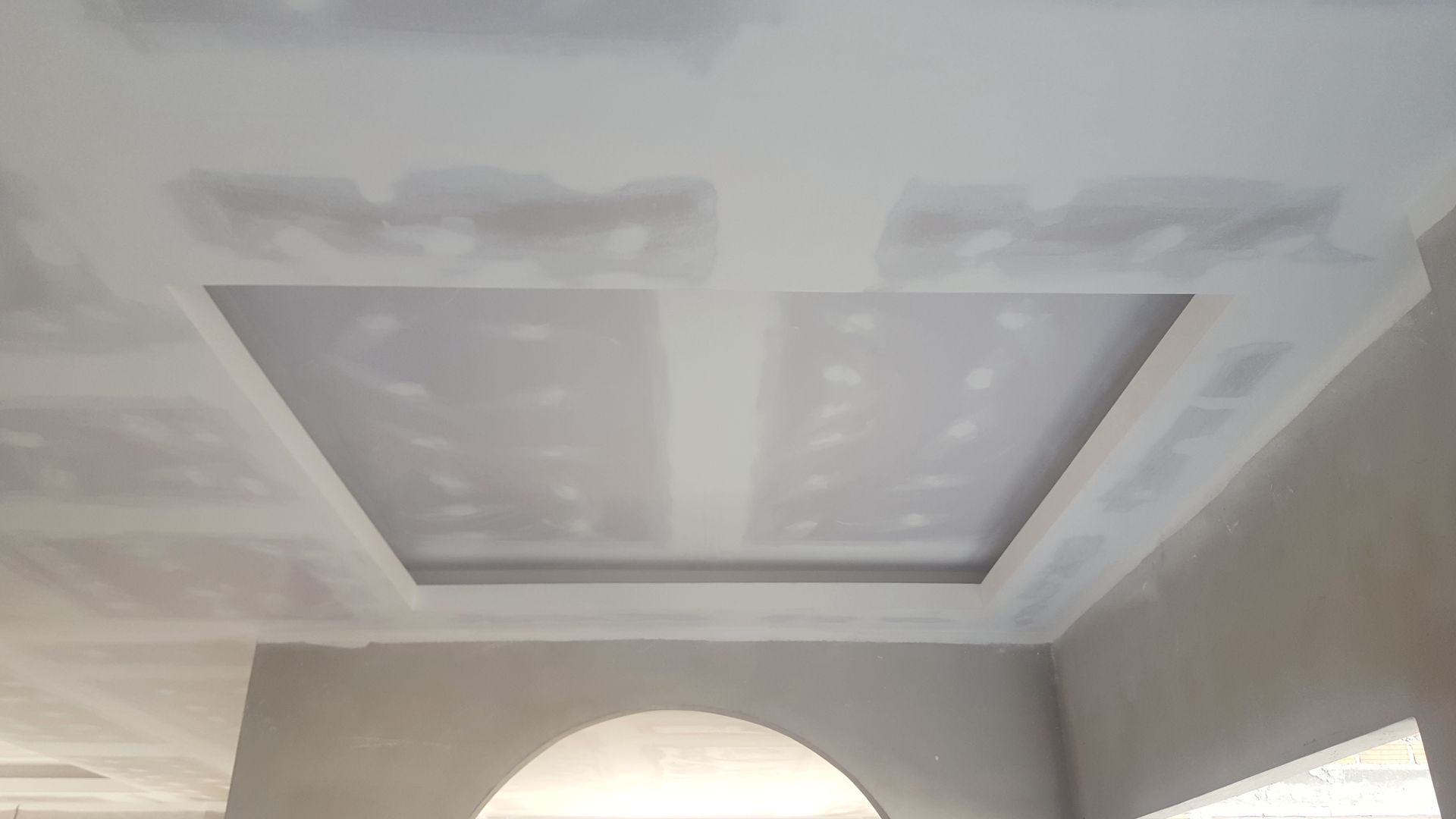
Once the patch is installed, joint tape is embedded in a base coat of compound, followed by successive coats that feather the edges and fill fastener dimples. After the final coat dries, the surface is sanded smooth and primed so it accepts paint evenly. You will notice the ceiling returns to a flat, consistent plane without visible seams, ridges, or soft spots that telegraph through lighting.
Texture matching is not included in basic ceiling repair unless specified. Popcorn, knockdown, and other spray textures require separate application after the mud work is complete. Trav Construction Group does not perform roof or plumbing repairs; those trades must resolve leaks before ceiling patching begins. If you are combining ceiling repair with painting or other finish work, bundled service pricing may reduce total project cost.
Common Questions About Ceiling Repairs
Homeowners in Tri-State area Township frequently ask how long ceiling repairs take, whether all water-stained sections need replacement, and what steps prevent future cracking.
What causes ceilings to sag between joists?
Sagging typically results from inadequate fastening, excessive weight from insulation or storage above, or prolonged moisture exposure that softens the drywall core and weakens its bond to the framing.
How do you know if a ceiling stain indicates ongoing damage?
If the stained area feels soft when pressed or shows new discoloration after recent weather, the leak source is still active and must be repaired before patching proceeds.
Why do ceiling cracks reappear after being patched?
Cracks return when movement continues in the framing, when joint compound is applied too thick without proper feathering, or when temperature and humidity fluctuations cause expansion and contraction in undersized or improperly fastened panels.
When should you replace an entire ceiling instead of patching sections?
Full replacement makes sense when more than half the surface shows damage, when plaster has delaminated across multiple bays, or when repeated leaks have compromised structural integrity throughout the room.
How long does joint compound need to dry on a ceiling repair?
Overhead applications dry slower than walls due to reduced airflow and gravity, so allow a full 24 hours between coats and longer in humid conditions common during Tri-State area summers.
If your ceiling shows cracks, stains, or sagging sections that need professional attention, Trav Construction Group provides ceiling repair throughout Tri-State area Township with careful attention to matching existing planes and preparing surfaces for final finishes.